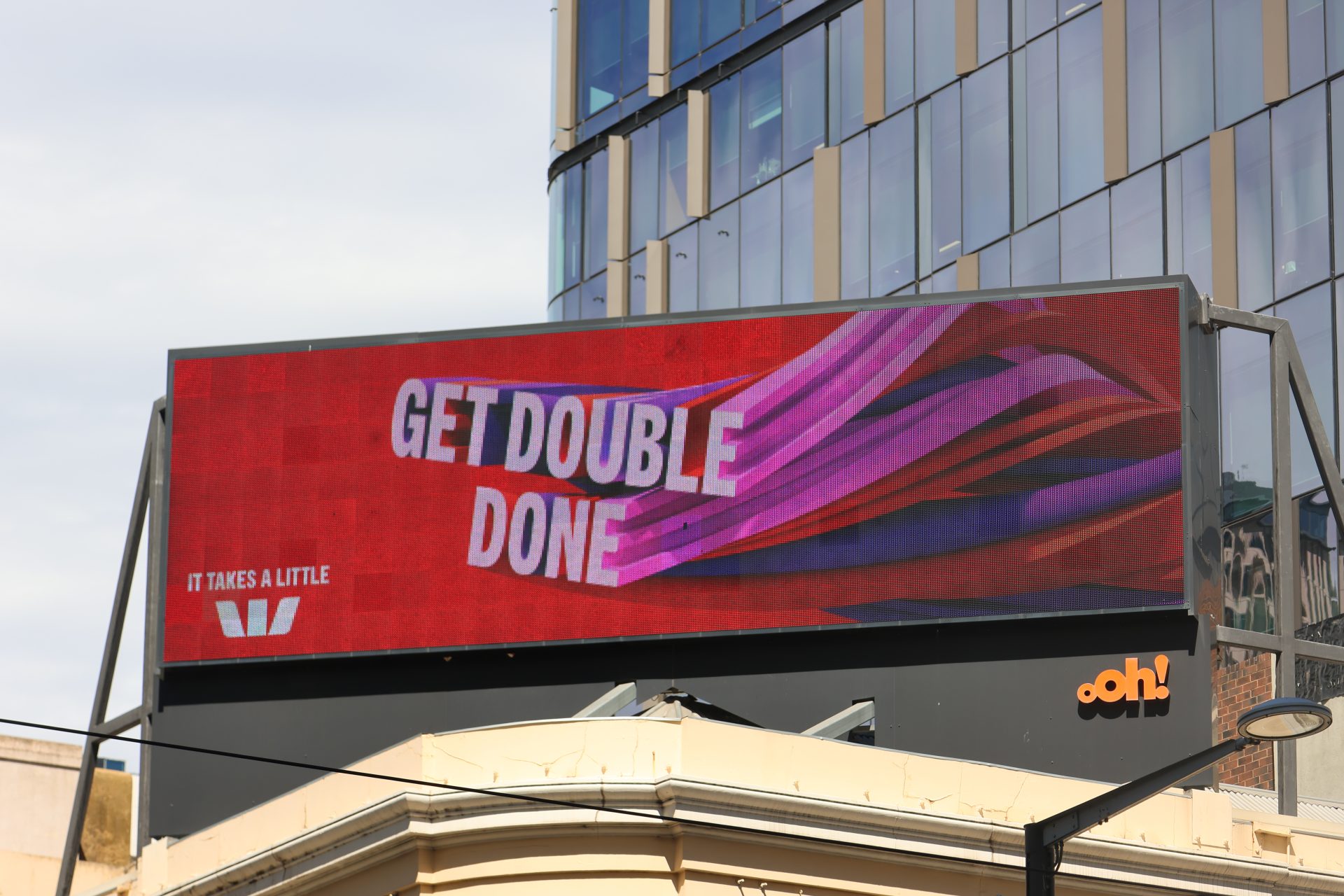
In a marketplace where over a million creatives are seen every month, how do fast moving consumer goods companies cut through the noise and capture market share.
The answer lies buried in the data—and it’s not what most marketing teams expect. The hidden patterns behind FMCG success stories can be decoded using Bigdatr’s automated Creative Insights and Creative Index.
Five dominant themes have continued to emerge in FY25: sensory-driven visuals, authentic product placement, ASMR audio integration, emotional storytelling, and health-focused labelling.
Weekly ad schedules vary across categories. This report examines Alcoholic Beverages, Baked Goods, Confectionary and Pet Supplies—and which categories are seeing YoY growth and decline.
Ad Scheduling: When FMCG brands advertise most
The competitive landscape shifts daily as brands activate, pause, and optimise creative assets across channels. Creative Index tracking reveals the precise moments when competitors launch new campaigns, the specific creative assets driving their media investment, and how activity patterns evolve across traditional and digital touchpoints.
Alcoholic Beverages Timing Cycle: Monday-Saturday execution with pronounced weekend peaks
- Heineken: Consistent 6-day scheduling achieving peak Friday-Saturday activity.
- Hahn: Wednesday-Saturday 7-week cycle with budget concentration in final FY25 week (June 23rd).
- Archie Rose: Monday-Wednesday personalised creative peaks with 90-day TikTok influencer momentum.
Baked Goods Timing Cycle: Monday initiation with sustained activity around Friday-Saturday
- TipTop: Monday launch strategy with declining Sunday visibility, 4-week peak performance followed by June activity reduction.
- Helga’s: Sunday-initiated weekly cycles with Friday-Saturday peaks, monthly placement intervals.
Confectionary Timing Cycle: Sunday launch with biweekly rotation
- Cadbury: Sunday-launch of campaign variations employing week-on/week-off rotation to minimise creative fatigue.
- KitKat: Saturday-Monday peak activity with reduced May visibility followed by June scheduling consistency.
Pet Supplies Timing Cycle: Sunday-midweek with concentrated placements on Youtube
- Optimum: Shorter video formats achieve consistent activity versus 15-second alternatives, with creatives being served more often in the first half of the week.
- Purina Felix: Sunday-Monday YouTube peak activity with month-end advertising cessation (May-June).
Top creative themes driving FMCG campaign success in 2025
Sensory-Driven Strategy
Close-up product visualisation is a common theme on outdoor advertising creatives. While ASMR is executed across radio radio channels (beer fizzing, can opening sounds). This approach targets subconscious purchase triggers rather than rational decision-making.

Brand Transparency
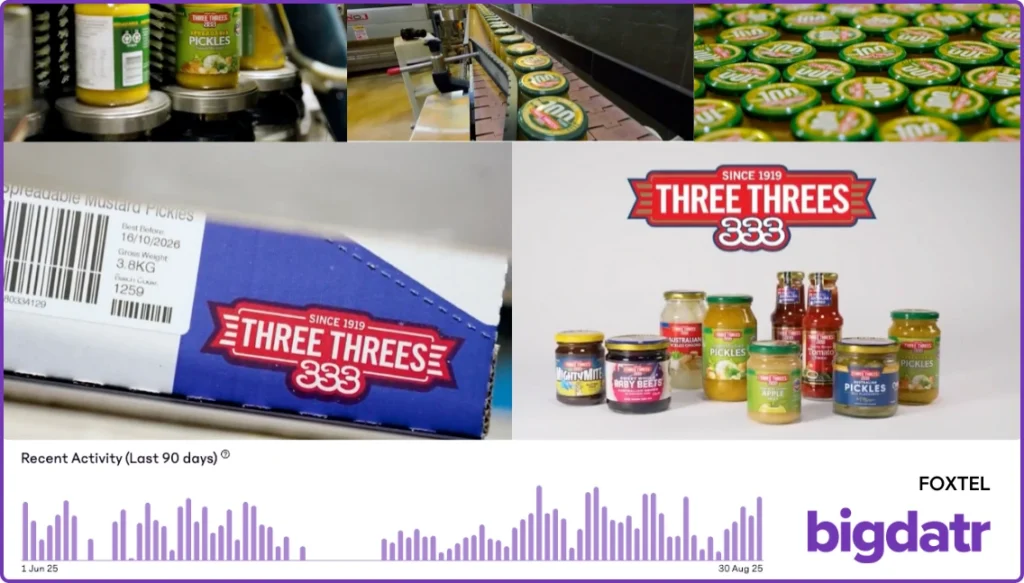
Whether consumers have lost trust in big brands, or government initiatives like Future Made in Australia have encouraged locally-made products, new creative directions reflects consumer fatigue with aspirational advertising. ThreeThrees’ behind-scenes packaging facility footage signals transparency as competitive advantage. This trend indicates brands are responding to consumer skepticism by demonstrating rather than claiming authenticity, particularly effective for categories where trust drives repeat purchase.
Emotional Value
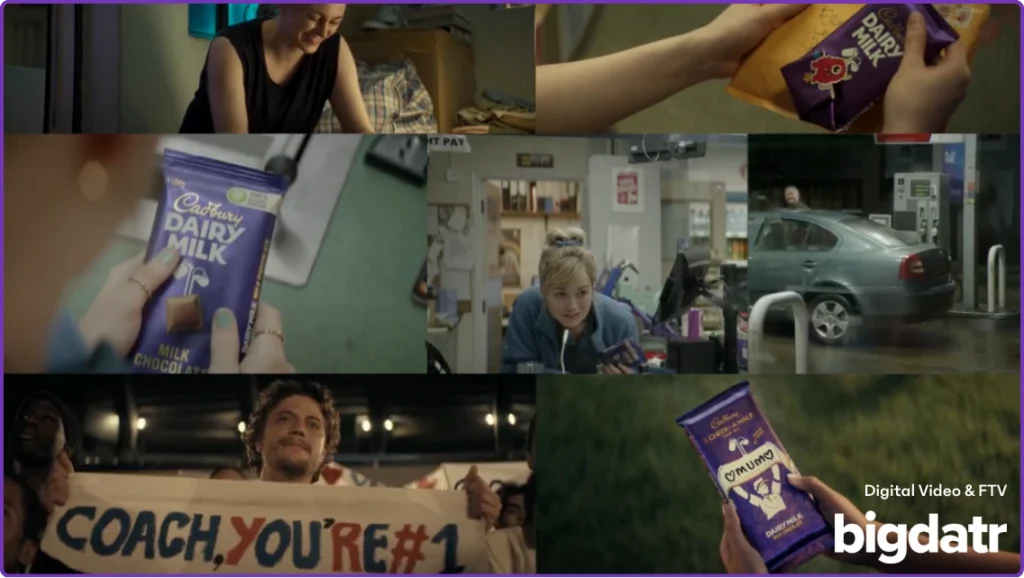
Storytelling transforms products into something more meaningful. Cadbury doesn’t sell chocolate by talking about how it tastes—they show fathers connecting with children through small acts of kindness. The chocolate becomes the tool for showing care, giving consumers a reason to choose one brand over another beyond taste or price alone.
Health-Driven Differentiation
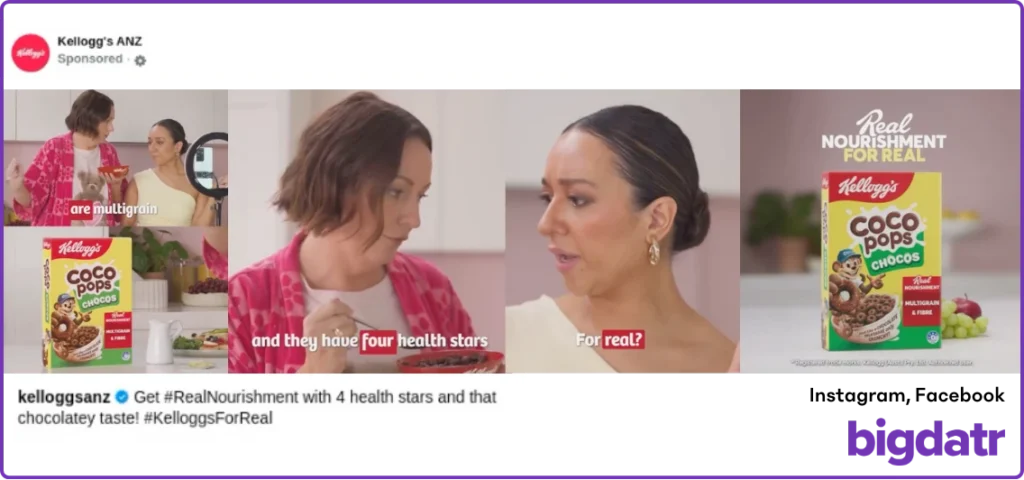
Bold health-star ratings and protein callouts reflect regulatory compliance evolving into competitive strategy. Brands are leveraging mandatory health labelling as differentiation tools, as consumers increasingly care about health benefits. Kellogg’s demonstrates this shift with their “For Real” campaign, prominently featuring Coco Pops’ 4/5 health stars and Nutri Grain’s 12g protein content. These campaigns signal a broader trend where traditional breakfast and snack brands are repositioning health credentials as primary selling propositions rather than secondary benefits.
Native Content
Social media platforms require content that feels natural to each environment rather than traditional advertising repurposed across channels. Brands are moving beyond simply placing ads on different platforms to creating content that matches how users actually engage on each platform. Archie Rose’s TikTok strategy exemplifies this approach—their influencer brewing experiences feel authentic to TikTok’s behind-the-scenes culture, resulting in 90-day prominence increases.

Explore Budget Allocation by Media Type on Media Value.
Competitive Intelligence Access
This analysis includes Advertising Creative and Media Value data from 4 FMCG industries: Food, Produce and Dairy, Alcoholic Beverages, Pet Retailers and Products and Cleaning Products.
For comprehensive media budget distribution, contact us for detailed competitor intelligence and category-specific investment patterns.